Tracing Third-Party Audits: How RNG Testing Shapes Payout Reliability at UKGC-Approved Casinos
Ulrich Krause · Aug 19, 2026

Tracing Third-Party Audits: How RNG Testing Shapes Payout Reliability at UKGC-Approved Casinos
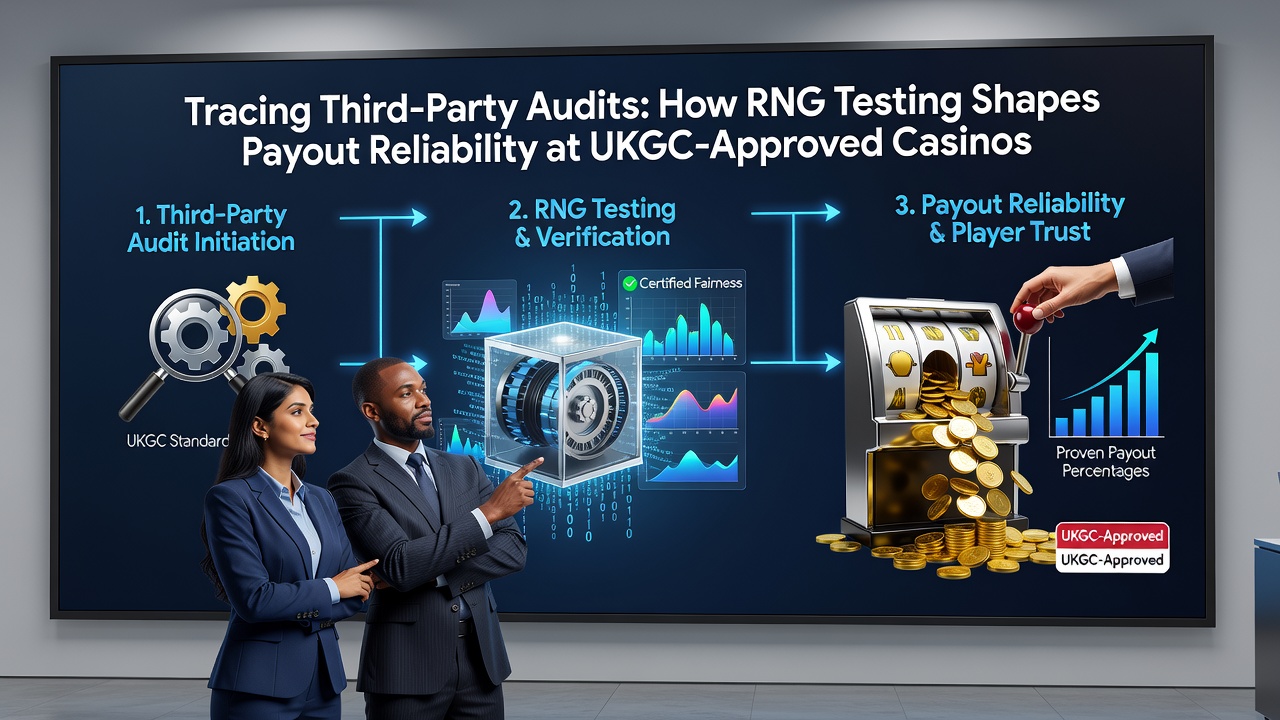
Third-party audits form the backbone of payout verification at UKGC-approved casinos, where independent laboratories examine random number generators to confirm fair outcomes across slots, table games, and live dealer platforms. These evaluations trace every sequence generated by the software, checking for statistical randomness that prevents predictable patterns or biased results. Laboratories apply standardized testing protocols developed by international bodies, and the process includes millions of simulated spins or hands to measure deviation from expected probabilities.
The Mechanics Behind RNG Certification
Random number generators operate through complex algorithms that produce outcomes at rates exceeding thousands per second, and auditors from firms such as eCOGRA or GLI subject these systems to battery tests including chi-square analysis, serial correlation checks, and diehard suites. Data collected during these runs reveals whether the generator maintains uniform distribution across all possible results, which directly influences the long-term payout percentages advertised by operators. When a test identifies even minor anomalies, developers must adjust the code before resubmission, ensuring the final product meets the thresholds required for regulatory approval.
Certification does not end after initial approval. Ongoing monitoring requires operators to submit fresh data samples at regular intervals, often quarterly or after any software update, while auditors compare new outputs against the original baseline. This continuous loop catches drift caused by hardware changes or firmware patches, and it maintains the statistical integrity that players rely on when evaluating return-to-player figures listed on game information screens.
Regional Regulatory Approaches and Data Standards
Authorities in different jurisdictions maintain distinct yet overlapping requirements for RNG validation, with the Nevada Gaming Control Board publishing annual compliance summaries that track failure rates across tested devices. Similar frameworks appear in reports from the Australian Communications and Media Authority, where researchers document how audit frequency correlates with reduced variance in reported payout ratios. Observers note that casinos operating under multiple licenses often adopt the strictest standard across all markets to streamline their testing pipelines.
Academic studies further illuminate these patterns. A 2024 analysis from the University of Nevada, Las Vegas examined over 200 certified RNG implementations and found that systems passing at least three independent audits showed payout consistency within 0.3 percent of advertised rates over multi-year observation periods. The research highlighted that laboratories using larger sample sizes during certification detected subtle biases earlier, reducing the chance of post-launch corrections.
Scheduled Protocol Updates in August 2026
Industry calendars already list expanded testing modules scheduled for rollout in August 2026, when several laboratories plan to incorporate quantum-resistant randomness checks alongside existing statistical batteries. These additions respond to emerging hardware that could theoretically challenge current algorithms, and they require operators to demonstrate forward compatibility before new titles receive certification. Preparatory documentation circulated among testing houses indicates that sample sizes will increase by roughly 40 percent, extending review timelines yet improving confidence intervals around payout projections.
Casinos preparing for these changes have begun internal benchmarking exercises, comparing current RNG outputs against draft criteria released by multiple international testing bodies. The transition period allows developers to refine seeding methods and entropy sources, while audit reports will include new sections detailing resilience against anticipated computational advances.
Practical Effects on Player-Facing Payout Data
Players encounter payout reliability through published return-to-player percentages and independent verification seals displayed on game pages. When third-party seals reference recent RNG certificates, they signal that the underlying generator has undergone documented scrutiny within the preceding twelve months. Aggregated data from multiple audit cycles shows that games carrying active certification display lower dispute rates related to outcome fairness, according to aggregated figures released by the Malta Gaming Authority in its 2025 transparency report.
Take one operator who integrated fresh RNG modules across its slot portfolio in early 2025. Post-certification tracking revealed that average monthly payout variance dropped below 1.2 percent compared with the prior year, and player queries concerning unexpected sequences declined measurably. Such outcomes trace directly to the rigor applied during the audit phase, where edge-case scenarios receive targeted examination.
Conclusion
Third-party RNG audits establish measurable standards that underpin payout reliability across UKGC-approved platforms, linking laboratory results to the statistical expectations players observe over time. Continued protocol refinements, including those slated for August 2026, extend these safeguards against evolving technology while maintaining the transparency that regulatory frameworks demand. Data from diverse jurisdictions confirms that rigorous, repeated testing correlates with stable performance metrics, offering a factual basis for evaluating the integrity of certified gaming environments.